
Space Coloring Pages: Free PDFs for Kids Ages 3–8
Space Coloring Pages for Kids Ages 3-8


10 coloring pages — click any to open PDF
Space Coloring Pages: Free PDFs for Kids Ages 3–8
Coloring gives young explorers a fun way to connect with outer space, from familiar planets to faraway stars. Our space coloring pages are free, high-quality PDF downloads for kids ages 3–8, formatted for standard US Letter paper, so families can choose a design, print it instantly, and start creating.
We have included easy outlines for preschoolers, detailed scenes for older children, and imaginative adventures that turn the universe into a hands-on activity. Download a favorite page, gather crayons or markers, and launch a creative space mission at home.
Find the Perfect Page for Every Young Explorer
Free printable PDF
All 10 space ages 3 pages — plus the rest of the space pack
One PDF with every free space coloring page on the site: the 10 space ages 3 pages from this page plus 8 more. Clean line art for ages 3–8, sized for standard letter paper.
The best page matches a child’s age, coloring control, and interests. Big shapes support early practice, while smaller details give older kids more room to focus and invent.
Easy Designs for Preschoolers
Preschool-friendly pages use bold outlines and open spaces that are easy for small hands to fill. Simple planets, a friendly moon, large stars, and cheerful aliens give kids clear areas to color without feeling crowded.
We can invite children to name each object as they work. Asking whether a shape belongs to a planet, galaxy, or spaceship keeps the activity playful and builds space vocabulary.
Detailed Scenes for Ages 6–8
Children ages 6–8 often enjoy pages with extra details, including rings around planets, star fields, rocket parts, and busy galaxy scenes. These designs give them opportunities to practice staying inside lines and choosing colors for different objects.
A page with several planets or spaceships also creates natural prompts for counting, comparing sizes, and spotting repeated shapes.
Realistic and Imaginative Adventures
Realistic pages introduce recognizable planets, stars, and the moon, while imaginative designs invite children to invent aliens, space stations, and new worlds. We can offer both styles so kids move between science-based coloring and open-ended storytelling.
A spaceship might travel through a galaxy on one page, then land beside a colorful alien city on the next. The finished artwork becomes part of the child’s own outer-space adventure.
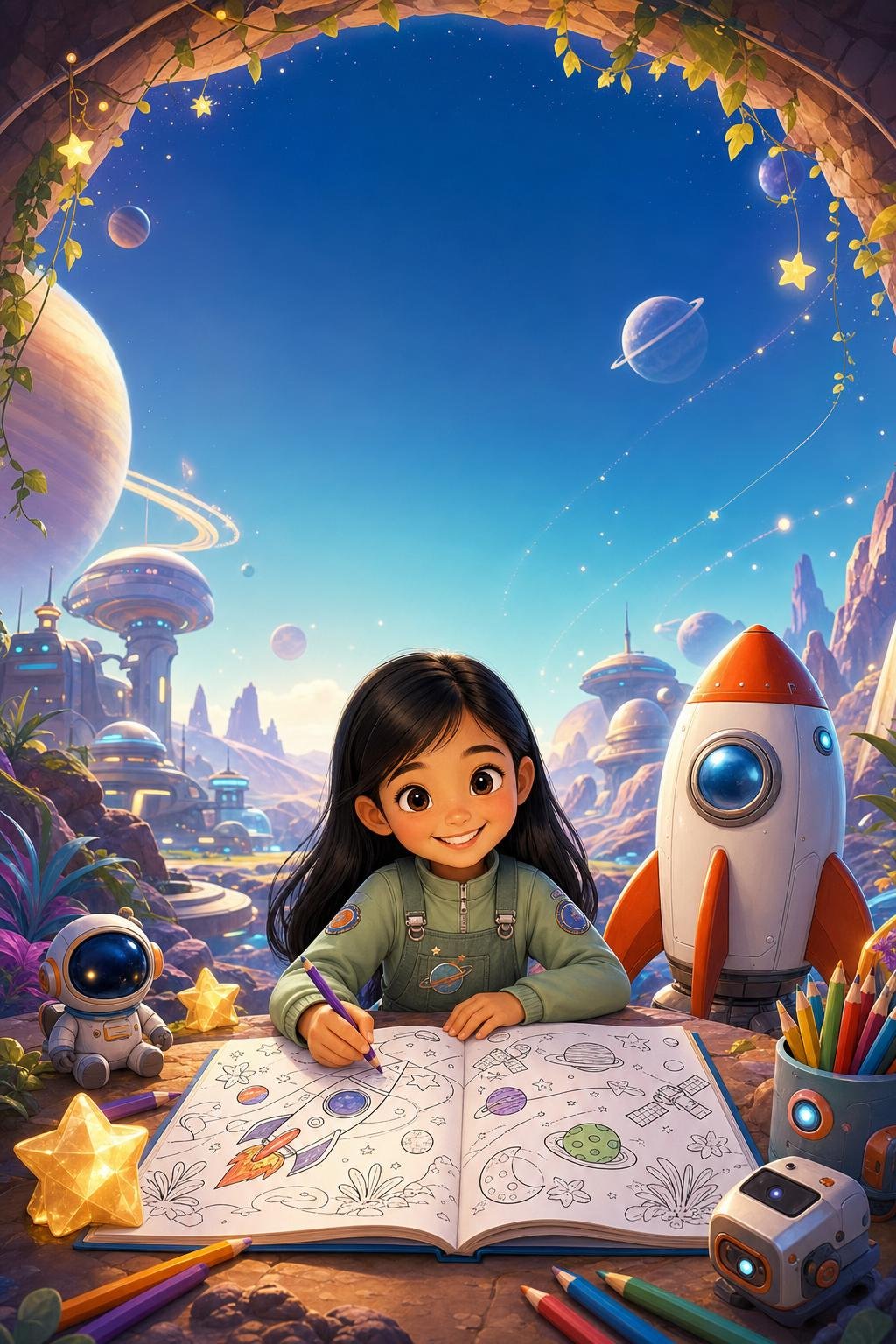

Make it personal
Turn space coloring time into their own adventure
Preview the matching personalized book with their name on the cover, then continue to the full book page with your choices already filled in.
Choose a Space Adventure to Color
A strong space theme gives every child an exciting place to begin, whether they prefer the solar system, astronauts, rockets, or imaginative missions. NASA provides printable pages featuring subjects such as Earth, the Moon, Mars, Jupiter, Saturn, and other missions through its NASA coloring pages for kids.
Use realistic pages for simple science conversations, then add creative scenes for storytelling. Children can color a solar system coloring page, label planets, or design a rocket launch with their own colors.
Planets, the Sun, and the Solar System
Solar system coloring pages help children recognize the sun and the planets in a visual, hands-on format. We can ask kids to find Earth, Mars, and Saturn, then talk about rings, moons, and the order of the planets.
A solar system coloring page also works well for a quick matching game. Write planet names on small slips of paper and let children place each name beside the correct colored picture.
Astronauts, Rockets, and the Space Shuttle
Astronaut pages bring human exploration into the activity, while rockets and a space shuttle add movement and excitement. Children can choose colors for a spacesuit, add flames to a rocket, or draw windows and mission details.
After coloring, we can ask where the astronaut is traveling and what supplies the crew might carry. A few sentences turn a quiet art activity into a launch story.
Mars, Saturn, Earth, and Asteroids
Mars invites red and orange shades, Saturn offers rings to decorate, and Earth gives children a chance to add land, water, and clouds. Asteroids can become gray rocks, colorful fantasy objects, or pieces of a larger space scene.
NASA includes dedicated printable pages for Mars and Saturn, along with Earth and Moon activities, so children can connect their artwork with real missions and worlds.
Solar System Coloring Pages for Learning
We can use a completed page to practice planet names, letter sounds, counting, and position words such as near, far, above, and below. Older children can write one short fact beside each planet after coloring.
Keep the activity light and age-appropriate. A preschooler might identify Earth, while a seven-year-old might label Mars and Saturn and explain why Saturn’s rings stand out.
How to Download, Print, and Start Coloring
Downloading takes a few quick steps: choose a design, open its PDF, save or print the file, and place the page on a clear work surface. Standard US Letter formatting makes these pages ready for common home printers.
For the cleanest result, select the printer’s actual-size or 100% setting when available. We can print a favorite page again whenever a child wants a fresh color plan.
Instant PDF Downloads for US Letter Paper
Choose the page that fits your child’s age and interest, then open the PDF download. Select print, confirm US Letter paper, and check the preview so the full outline fits within the printable area.
High-quality line art keeps edges clear when printed at home. Store saved PDFs in a family folder so favorite pages remain ready for rainy days, playdates, or classroom activities.
Crayons or Markers: What Works Best?
Crayons work well for preschoolers because they are easy to grip and create gentle color without soaking through ordinary printer paper. Washable markers add brighter color and suit children who enjoy bold outlines and quick filling.
Place a spare sheet beneath marker pages to protect the table and the next page. For extra detail, colored pencils give older children more control over small stars, planet rings, and spaceship panels.
Simple Ways to Add a Learning Moment
Ask children to point to the sun, find Earth, or count the stars before they begin. During coloring, invite them to describe the scene using words such as hot, cold, round, bright, near, and far.
We can also write the date and the child’s name on the back. Comparing pages over time shows how their color choices, drawing details, and pencil control develop.
Make More Than a Coloring Sheet
Finished pages can become hands-on crafts, learning displays, and gifts. With scissors, string, cardstock, or dark construction paper, one coloring activity can keep going after the last section is filled.
Choose sturdy paper for projects that involve cutting or hanging. Younger children should use scissors with adult help.
Create a Solar System Mobile
Color planet pages, cut around each shape, and punch a small hole near the top with help from an adult. Tie the planets to an embroidery hoop or hanger at different lengths to create a simple solar system mobile.
Add stars and a moon to fill empty spaces. We can label each planet on the back for a mobile that also supports review.
Build a Planet Poster or Night-Sky Collage
Mount colored planets on black construction paper and add small white dots for stars. A large sun in the center can anchor a poster, while a galaxy background creates a deeper night-sky collage.
Children can arrange the planets in order or create an imaginary galaxy with invented worlds. Add each planet’s name on a small card for an easy display.
Use Finished Pages for Cards and Room Décor
A colored rocket or planet makes a cheerful birthday card when mounted on folded cardstock. Larger pages can decorate a bedroom wall, reading corner, door, or family art display.
We can laminate cut-out planets for longer-lasting decorations. Finished stars, moons, and galaxy scenes also work well as labels for shelves or storage bins.
Pick a Page and Launch Their Creativity
We recommend starting with a free, high-quality US Letter PDF that matches the child’s age, then printing a rocket, planet, or astronaut page for immediate creative play. Simple outlines suit ages 3–5, while detailed planets and space scenes give ages 6–8 more room to focus.
Keep several pages available so children can choose their own mission. One child might color a rocket launch, while another creates a bright planet scene with stars and aliens.
Frequently Asked Questions
How do I download and print the space coloring pages?
Choose a page, open the PDF, and select the download or print option. Set the printer to US Letter paper and actual size or 100% when that setting is available.
What paper should I use for crayons and markers?
Regular printer paper works well for crayons and washable markers. Place an extra sheet underneath when using markers to protect the surface below.
Are these coloring pages suitable for preschoolers?
Yes, pages with large shapes and bold outlines suit preschoolers ages 3–5. We can choose simple planets, stars, moons, and rockets before offering busier galaxy scenes.
Can I print the PDF pages more than once for my children?
Yes, saved PDFs make it easy to print another copy for siblings, repeat activities, or new color ideas. Keep the files for personal or classroom use where the page’s terms allow repeated printing.
How can I use solar system coloring pages for learning at home?
Ask children to identify the sun, Earth, Mars, Saturn, and other planets as they color. Older kids can label the solar system, count objects, or write one short fact beside each finished picture.